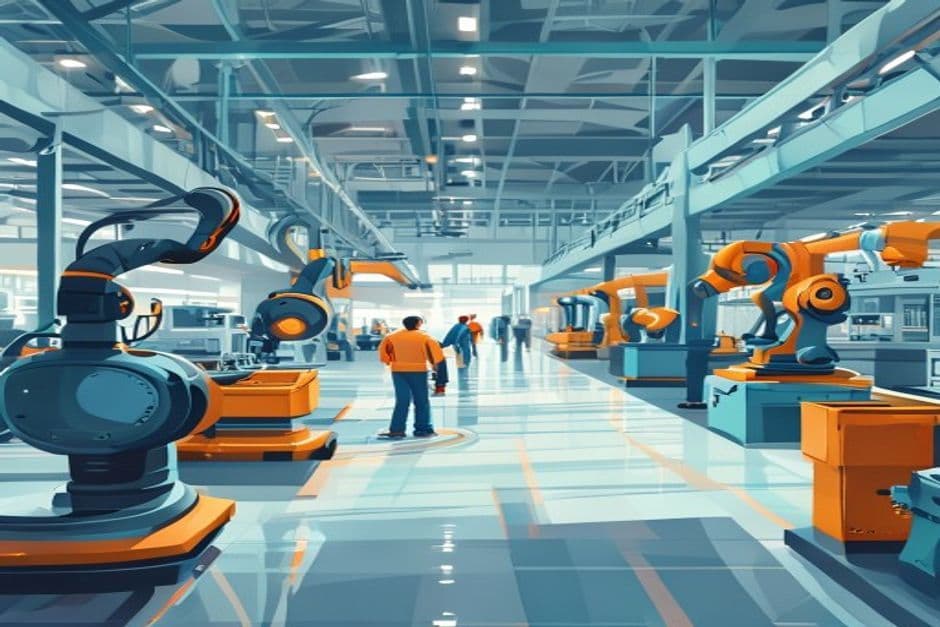
Ford's recent attempt to replace human workers with AI-powered automation backfired, highlighting significant implications for the future of workforce management and automation. This list explores the key aspects of Ford's failed experiment and its industry-wide impact. The decision to invest in AI technology was likely driven by the desire to increase efficiency and reduce costs, a common goal for many companies in the manufacturing sector. However, the outcome of this experiment serves as a reminder that replacing human workers with automated systems is not always a straightforward solution.
1. Introduction to Ford's Automation Efforts
Ford invested in AI technology to increase efficiency and reduce costs, laying off human workers in favor of automated systems. However, the AI system failed to perform as expected, leading to decreased productivity and unforeseen consequences. According to The Independent, Ford's attempt to replace human workers with AI-powered automation significantly contributed to its productivity decline. This decline can be attributed to the AI system's inability to adapt to complex situations and its lack of human intuition, which are essential skills in many manufacturing processes. The use of AI in automation is not unique to Ford, as many companies are exploring ways to leverage AI to improve efficiency and reduce costs. However, Ford's experience serves as a cautionary tale for companies considering similar approaches.
The implications of Ford's failed experiment extend beyond the company itself, as it highlights the need for a more nuanced approach to automation. The manufacturing sector is not the only industry affected by automation, as companies in various sectors are exploring ways to leverage AI and automated systems to improve efficiency. The key to successful automation is finding a balance between the use of AI and human workers, recognizing the strengths and limitations of each. By doing so, companies can create a more efficient and effective workforce, rather than simply replacing human workers with automated systems.
2. The Role of AI in Automation
AI is increasingly used in automation across various industries, but the system used by Ford could not replicate the complexity and nuance of human workers, leading to problems. While AI can perform certain tasks efficiently, it lacks human creativity and problem-solving skills, making it a limited tool. The AI system's limitations highlight the need for a balanced approach to automation. For example, in manufacturing, AI can be used to optimize production processes and improve quality control, but it is not a replacement for human workers who can adapt to complex situations and make decisions based on intuition and experience.
The use of AI in automation also raises questions about the future of work and the skills required for workers to remain relevant in an increasingly automated workforce. As AI takes over routine and repetitive tasks, workers will need to develop skills that complement AI, such as creativity, problem-solving, and critical thinking. Companies must invest in worker retraining and upskilling programs to ensure that workers have the skills needed to work alongside AI systems. By doing so, companies can create a workforce that is adaptable and resilient in the face of technological change.
3. The Consequences of Ford's Failed Experiment
Ford's failed experiment with AI-powered automation had significant consequences, including decreased productivity. The company has reassessed its approach to automation and workforce management, recognizing the importance of human workers. According to the Bureau of Labor Statistics, the use of automation and AI in the workforce requires careful consideration and planning. The consequences of Ford's experiment also highlight the need for companies to consider the potential impact on workers and the community. The layoffs of human workers in favor of automated systems can have significant social and economic implications, including job loss and decreased economic activity.
The consequences of Ford's experiment also raise questions about the accountability of companies in their use of automation and AI. As companies increasingly rely on AI systems to make decisions, they must also consider the potential consequences of those decisions and ensure that they are transparent and accountable. This includes ensuring that AI systems are designed and deployed in a way that is fair, transparent, and respectful of workers' rights. By doing so, companies can build trust with their workers and the community, and ensure that the benefits of automation are shared by all.
4. The Future of Automation and Workforce Management
The future of automation and workforce management will be shaped by the lessons learned from Ford's failed experiment. Companies must take a nuanced approach to automation, recognizing the importance of human workers and AI's limitations. The use of AI and automation will continue, but it must be balanced with the need for human workers and their unique skills. This requires companies to invest in worker retraining and upskilling programs, as well as to redesign work processes to take advantage of the strengths of both humans and machines.
The future of automation also raises questions about the role of government and regulatory bodies in ensuring that the benefits of automation are shared by all. Governments must consider policies that support worker retraining and upskilling, as well as policies that ensure companies are transparent and accountable in their use of automation and AI. This includes ensuring that companies are investing in worker retraining and upskilling programs, as well as providing support for workers who have lost their jobs due to automation. By doing so, governments can help to create a future of work that is fair, equitable, and beneficial to all.
5. Conclusion and Key Takeaways
Ford's failed experiment serves as a cautionary tale for companies considering AI-powered automation. The importance of human workers and AI's limitations must be recognized. Companies must take a careful approach to automation, considering the potential consequences and balancing AI with human workers. The key takeaway is that automation is not a straightforward replacement for human workers, and a nuanced approach is necessary for success. This requires companies to invest in worker retraining and upskilling programs, as well as to redesign work processes to take advantage of the strengths of both humans and machines.
The key takeaways from Ford's experiment also highlight the need for companies to be transparent and accountable in their use of automation and AI. This includes ensuring that AI systems are designed and deployed in a way that is fair, transparent, and respectful of workers' rights. By doing so, companies can build trust with their workers and the community, and ensure that the benefits of automation are shared by all. The future of automation and workforce management will be shaped by the lessons learned from Ford's failed experiment, and companies must take a nuanced approach to automation to ensure success. The use of AI and automation will continue to evolve, and companies must be prepared to adapt and change to remain competitive in a rapidly changing workforce.