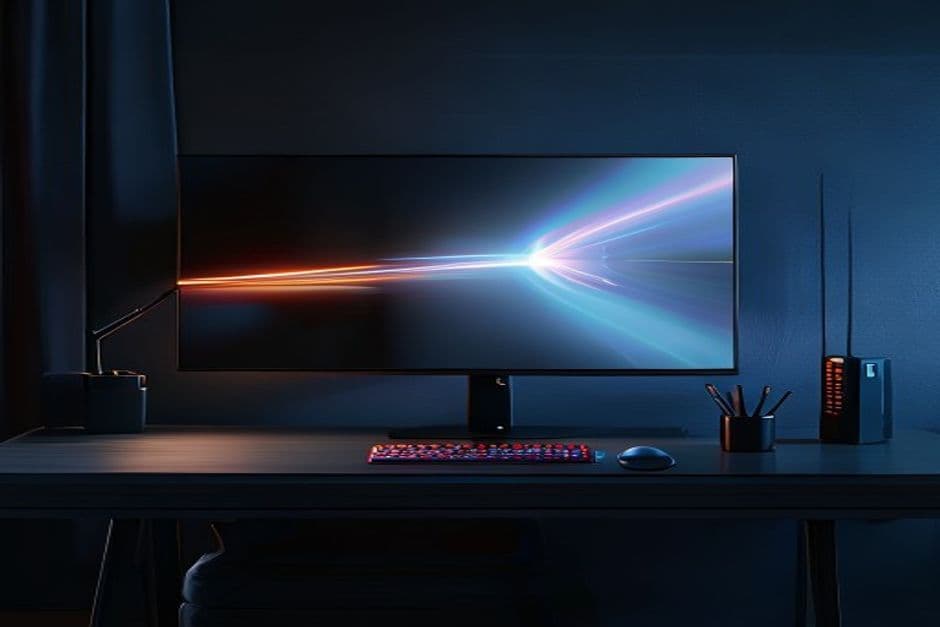
LG is poised to redefine the boundaries of visual performance by introducing the world's first 1000Hz, 1080p gaming monitor later this year. By pushing beyond the current industry standard, the company aims to eliminate motion blur for competitive gamers who rely on split-second reaction times. As noted in recent updates from the latest news on Reddit, this development signals a significant shift in how hardware manufacturers approach frame delivery and visual fidelity. This isn't merely an incremental upgrade; it is a fundamental reimagining of the display pipeline, designed to bridge the gap between digital processing and biological perception in a way that was previously thought to be impossible with current liquid crystal or OLED technologies.
Refresh Rates Define Competitive Edge
The transition from 60Hz to 144Hz was once considered a luxury, but the industry has since moved toward 240Hz and 360Hz as the new baseline for professional play. A 1000Hz refresh rate means the display updates its image every millisecond, offering a level of fluidity that pushes the limits of human perception. This leap is rooted in fundamental principles of physics regarding how displays render motion and how the brain processes rapid visual input. When a screen refreshes at 1000Hz, the interval between individual frames is reduced to a single millisecond, effectively neutralizing the "stutter" that occurs when the eye tracks a fast-moving object across the screen. In high-stakes environments like professional tactical shooters, this translates into a clearer image during rapid camera rotations, allowing players to track targets with surgical precision that is impossible on slower panels.
The jump to 1000Hz represents a shift from merely smoothing out frames to creating a near-instantaneous visual connection between hardware and the user.
Achieving this frequency requires more than just a fast panel; it demands a total overhaul of the display controller architecture. It requires massive bandwidth—far exceeding the capabilities of standard DisplayPort 1.4—and precise control over pixel response times to prevent ghosting or smearing, which occur when the liquid crystals cannot transition fast enough to keep up with the incoming signal. LG's move suggests they have solved the complex engineering hurdle of maintaining signal integrity at such extreme speeds through advanced panel driving algorithms and perhaps proprietary interface compression techniques. By minimizing the time a pixel spends transitioning between colors, LG ensures that the image remains sharp even during high-velocity movement, providing a tangible advantage in reaction-based titles where every millisecond dictates the difference between victory and defeat.
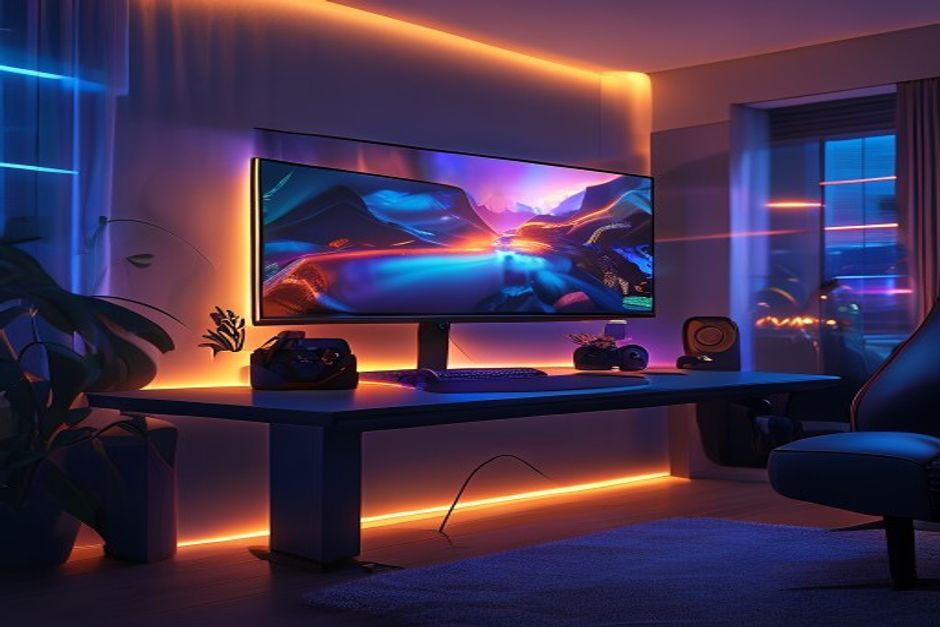
While 1080p might seem conservative for a cutting-edge monitor, it is the standard resolution for competitive eSports where raw frame rates take precedence over pixel density. By sticking to 1080p, LG ensures that modern gaming PCs can actually push enough frames to utilize the 1000Hz capacity. Pushing a 4K resolution at 1000Hz would currently be impossible for even the most powerful consumer-grade graphics cards, as the rendering load would be insurmountable. This focus on performance over resolution reflects a deeper understanding of the professional gaming market, where standardized testing metrics often prioritize input latency above all else. In this context, resolution is a secondary concern to the clarity of motion; a clear, sharp 1080p image is infinitely more valuable to a professional player than a blurry, high-resolution one. By narrowing the pixel count, LG optimizes the data throughput, ensuring that the GPU can feed the display with the necessary frame rate to keep the monitor saturated, thereby eliminating the input lag that plagues lower-refresh-rate configurations.
The Future of Display Technology
Integrating a 1000Hz panel into a consumer product forces the entire industry to adapt, from GPU manufacturers to cable standards. As monitors become faster, the traditional bottlenecks in the input chain become more apparent. We are moving toward an era where the bottleneck is no longer the screen, but rather the human response time itself. The next phase of development will likely involve integrating AI-driven frame generation to ensure that content can actually keep pace with these high-refresh-rate displays. This technology, which uses deep learning to interpolate intermediate frames, will be essential in bridging the gap when a game's engine cannot natively render at 1000 frames per second. Furthermore, the industry will need to revisit how input devices—like mice and keyboards—communicate with the system, as a 1000Hz display demands a polling rate that ensures the user's physical input is captured and processed within the same millisecond window. This creates a holistic ecosystem where every component, from the CPU to the mouse sensor, must be synchronized to maintain the fidelity of that 1ms cycle.
Watch for how other display manufacturers respond to this benchmark, as the race for the fastest screen will likely drive innovation in panel manufacturing and interface technology throughout the next year. As companies scramble to match LG’s achievement, we can expect to see advancements in backlighting, panel response times, and display port protocols that will eventually trickle down to the mainstream market, making ultra-high-refresh-rate gaming accessible to a broader audience. This is the new frontier of hardware evolution, where the goal is to make the monitor transparent to the user, effectively removing the digital barrier between intention and action.